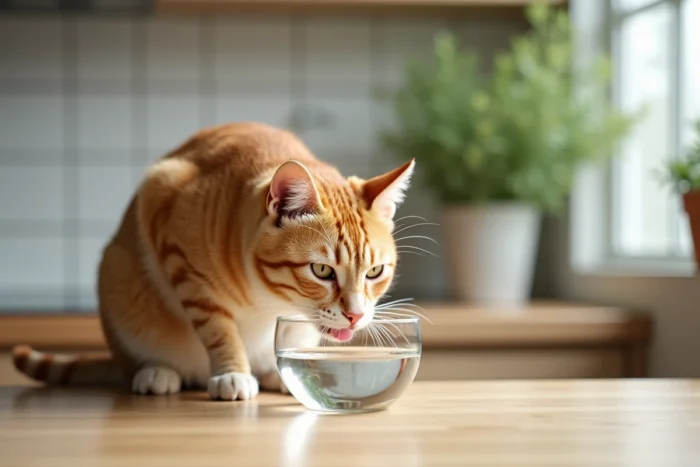
The water a cat drinks directly influences the functioning of its kidneys, the concentration of its urine, and its predisposition to urinary stones. Providing your cat with crystal-clear water, meaning low-mineral, filtered water or water free of chlorinated residues, alters measurable physiological parameters. The question deserves to be asked from the perspective of available data: what type of water produces what effects on feline health on a daily basis?
Water Composition and Renal Impact in Cats: Comparative Table
| Type of Water | Dry Residues (Mineralization) | Residual Chlorine | Risk of Feline Aversion | Effect on the Urinary System |
|---|---|---|---|---|
| Untreated Tap Water | Variable by Region | Present (sometimes marked after network work) | High in cats with sensitive noses | Reduced consumption, more concentrated urine |
| Filtered Tap Water (carafe or fountain) | Reduced | Very low to none | Low | Better acceptance, improved urinary dilution |
| Crystal-clear Water (low-mineral) | Low | Absent | Very low | Promotes regular hydration and diluted urine |
| High-mineral Bottled Water | High | Absent | Low | Excess mineral intake, increased risk of crystals |
This table highlights a often overlooked point: excessive mineralization poses as many problems as chlorine. Water that is too rich in magnesium or calcium can promote the formation of struvites or calcium oxalates in the cat’s bladder.
The practical sheets from AFVAC, updated in 2023, recommend that for cats that drink little, tap water should be left to sit for several hours before serving, in order to dissipate the chlorine. This simple recommendation is sometimes enough to restart consumption. To delve deeper into the subject, crystal-clear water for cats on Boule de Poil details the differences between types of water and their effects on the feline body.
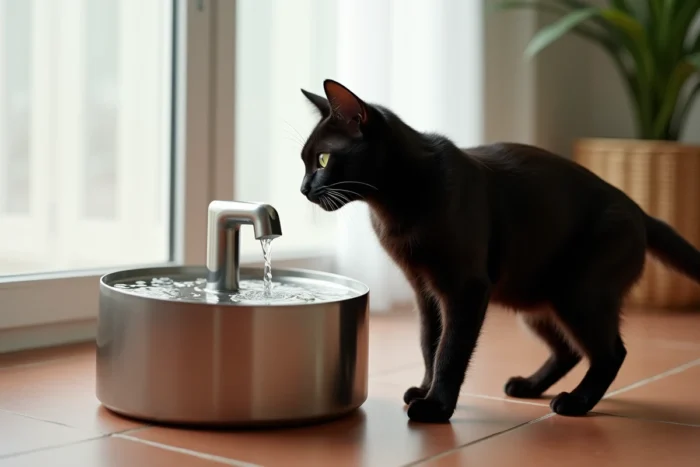
Chlorine in Tap Water and Refusal to Drink in Cats
Several French and Belgian veterinarians have reported since 2022 that some cats decrease their water consumption when the smell of chlorine is strong. The phenomenon intensifies after treatments or work on the drinking water network, when the concentration of chlorine temporarily increases.
The cat’s sense of smell is much more developed than that of humans. Water that seems neutral to us can emit an odor strong enough for a feline to cause partial or total refusal. This refusal is not a whim: it is a coherent sensory reaction.
Consequences of Reduced Water Consumption
A cat that drinks less produces more concentrated urine. This concentration increases the risk of crystallization of dissolved minerals in the bladder. The Vetolib/I-CAD syntheses presented at the 2023-2024 French Animal Health Days report a significant increase in consultations for lower urinary tract disorders in cats living exclusively indoors.
The identified correlation associates three factors: sedentary lifestyle, exclusive dry food diet, and low water consumption. Switching to water without residual chlorine, whether filtered or low-mineral, directly affects the third factor.
Crystal-clear Water vs. Filtered Water: What Choice for the Cat’s Urinary Health
Choosing low-mineral bottled water or filtered water at home serves the same goal: reducing residues that may bother the cat or overload its kidneys. The differences between the two options deserve examination.
- Bottled crystal-clear water offers a stable and controlled composition, with a low level of dry residues. It requires no filter maintenance but generates plastic waste and a recurring cost.
- Filtered water from a carafe or fountain removes a large part of the chlorine and impurities, but its quality depends on the frequency of filter replacement. A saturated filter can release bacteria into the water.
- Tap water left to sit in an open container for a few hours loses most of its free chlorine through evaporation. This method costs nothing but does not reduce mineralization.
The choice depends on the cat’s profile. A cat that drinks normally and has no urinary history generally tolerates dechlorinated tap water. In contrast, a cat prone to cystitis or stones benefits from receiving low-mineral water, whether from a bottle or a high-performance filtration system.
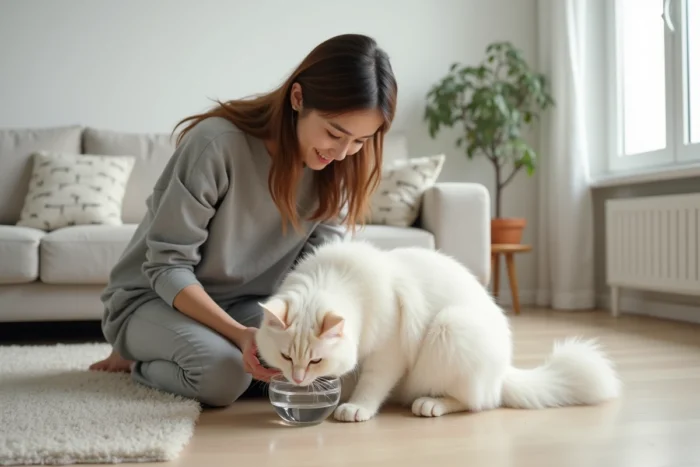
Dry Food and Increased Need for Crystal-clear Water in Indoor Cats
A cat fed exclusively on kibble derives very little water from its food. Kibble contains on average less than ten percent moisture, compared to over seventy percent for wet food. This dietary water deficit amplifies the cat’s dependence on its water bowl.
The problem is exacerbated in sedentary indoor cats. These animals move less, have a slowed metabolism, and often drink out of habit rather than real thirst. If the available water is unappealing to them (odor, taste, temperature), they may avoid it without the owner noticing immediately.
Warning Signs of Feline Under-hydration
- Dark and foul-smelling urine, a sign of high concentration of metabolic waste.
- Frequent visits to the litter box with the production of small amounts of urine, which may indicate bladder irritation.
- Skin that, when gently pinched at the shoulder, takes more than a second to return to place (skin turgor test).
- Unusual lethargy or loss of appetite, which sometimes accompanies moderate chronic dehydration.
Combining wet food with quality water is the most effective combination for maintaining proper hydration. Cats fed a mixed diet (kibble and wet food) naturally produce more diluted urine, which mechanically reduces the risk of crystals.
The quality of the water offered to a cat is not a cosmetic detail. It affects urinary concentration, the frequency of bladder disorders, and the animal’s water palatability. Switching to low-mineral or properly filtered water remains one of the simplest actions to protect a cat’s urinary system, especially if it lives indoors and primarily eats kibble.