When it comes to preparing recipes, the accuracy of measurements is fundamental to achieving flavorful results. Liquids, in particular, can pose challenges, especially when they need to be converted between different units. Amateur and professional cooks often find themselves facing recipes from various regions of the world, using different measurement systems.
To simplify conversions, it’s important to understand the common equivalents between milliliters, fluid ounces, cups, and other units. Using practical tools like conversion charts, mobile apps, or accurate kitchen scales can turn a daunting task into a seamless operation, ensuring consistently successful dishes.
The Basics of Liquid Measurement Conversions in Cooking
Understanding liquid measurement conversions in cooking is essential for any cook, whether amateur or professional. Cooking uses various units of measurement for liquids, such as tablespoon, teaspoon, cup, milliliter, and liter. These units often need to be converted to match recipes.
Here are some basic equivalents to know:
- 1 tablespoon = 15 ml
- 1 teaspoon = 5 ml
- 1 cup = 240 ml
- 1 liter = 1000 ml
Take, for example, a recipe requiring 200 ml of liquid. Converting 200 ml to liters is simple: 200 ml is equivalent to 0.2 liters. This conversion is fundamental for adjusting quantities when working with different units.
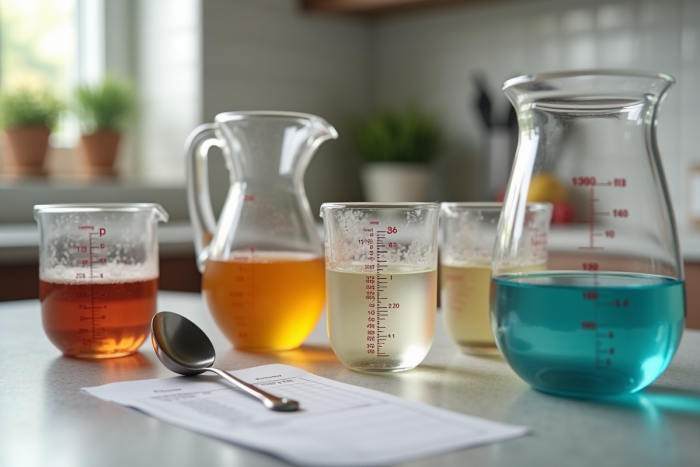
Using tools like measuring cups or kitchen scales ensures optimal accuracy. These instruments provide precise graduations, making conversions easier and ensuring that ingredient proportions remain accurate.
For those who prefer digital tools, mobile apps and online conversion charts can also be very helpful. They allow for quick and efficient conversion of different measurement units, thus simplifying the culinary preparation process.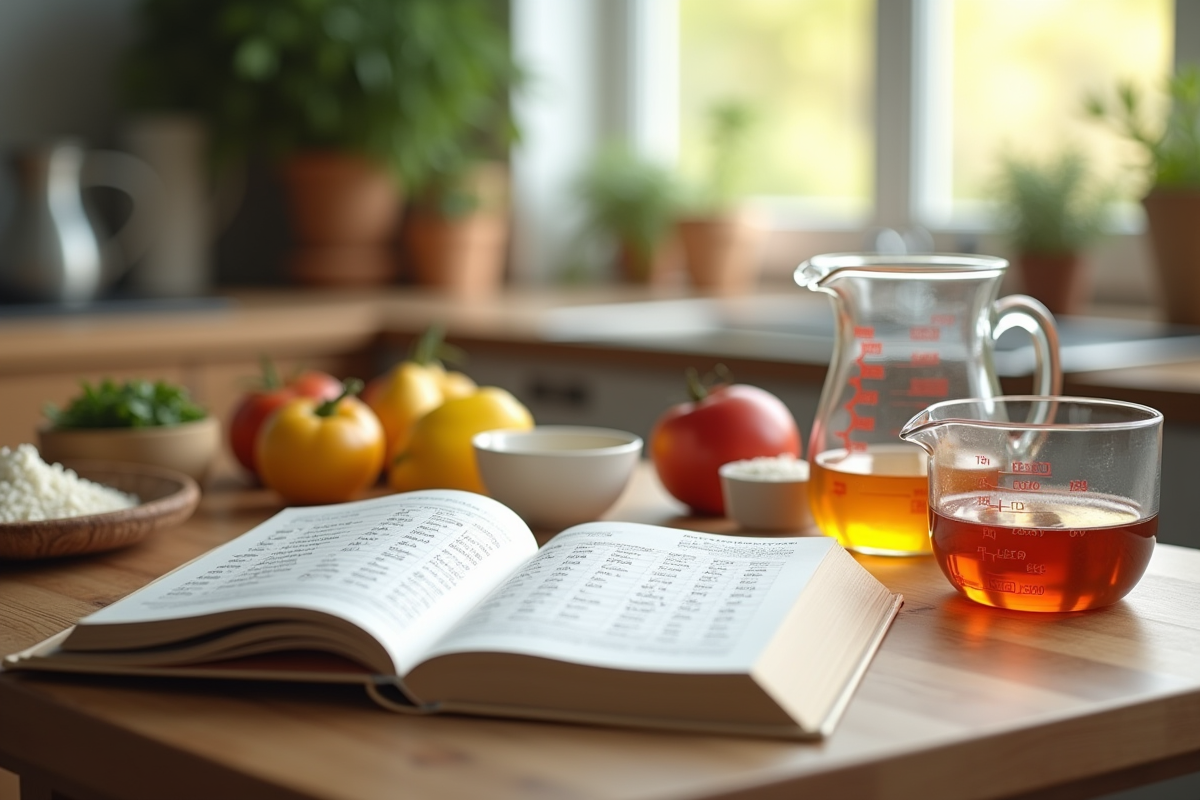
Practical Tips for Effective Conversion
For chefs and kitchen staff, unit conversion is fundamental. Here are some tips to facilitate this process.
Using Accurate Measuring Tools
Using measuring cups and kitchen scales allows for optimal precision. These tools provide clear graduations, simplifying the conversion between different units.
Utilizing Conversion Charts
Conversion charts are essential tools. Here are some common conversions:
- 1 cup of flour = 120 g
- ½ cup of flour = 60 g
- ¼ cup of flour = 30 g
Practical Applications
Mobile apps and online tools can quickly convert measurements. They are particularly useful when you need to convert less common units, such as ounces and pounds:
- 1 ounce = 28 g
- 1 pound = 454 g
Understanding Densities
Consider the densities of ingredients. For example, 1 liter of water equals 1 kg, but this is not the case for liquids like oil or milk. The accuracy of measurements often depends on understanding these specific densities.
Metric and Imperial Systems
Converting between the metric system and the imperial system can be complex. Here are some useful equivalents:
- 1 kilogram = 2.20462 lb
- 1 gram = 1000 mg
By following these practical tips, you can effectively convert liquid and solid measurements in cooking, ensuring the accuracy of your recipes.